Dental Malpractice Claims What to Know
Essential information for pursuing a personal injury claim for dental malpractice.

Essential information for pursuing a personal injury claim for dental malpractice.
Dental Malpractice Claims What to Know
Understanding Dental Malpractice Your Rights and Recourse
Hey there! Ever walked out of a dental office feeling worse than when you went in? Or maybe a procedure didn't go as planned, leaving you with pain, disfigurement, or even a bigger problem than you started with? If so, you might be dealing with dental malpractice. It's a serious issue, and just like any other medical professional, dentists have a duty to provide a certain standard of care. When they fall short, and that negligence causes you harm, you have rights. This isn't just about a bad filling; it's about significant injury, financial burden, and emotional distress. We're going to dive deep into what dental malpractice actually means, how it differs from just a bad outcome, and what steps you can take if you suspect you've been a victim. We'll cover everything from common types of dental errors to the legal process of filing a claim, and even touch on some specific products and scenarios where things can go wrong. So, let's get started on understanding your options and how to seek justice.
Defining Dental Malpractice When Care Falls Short
So, what exactly constitutes dental malpractice? It's not every time you have a cavity filled and it still hurts a bit afterward. Dental malpractice occurs when a dentist's treatment falls below the accepted standard of care for a reasonably prudent dentist in the same or similar community, and that deviation directly causes injury to the patient. Think of it this way: there's a generally accepted way to perform certain dental procedures, and if your dentist doesn't follow those accepted practices, and you get hurt because of it, that's where malpractice comes in. It's about negligence, not just an unfortunate result. For example, if a dentist extracts the wrong tooth, that's a clear deviation from the standard of care. If they fail to diagnose a serious condition like oral cancer despite clear symptoms, that could also be malpractice. It's a high bar, but it's there to protect patients from preventable harm. This standard can vary slightly depending on the specific procedure, the dentist's specialty, and even the resources available in a particular geographic area, but the core principle remains: did the dentist act as a reasonably competent professional would have?
Common Types of Dental Malpractice Identifying Negligence
Dental malpractice isn't a single event; it can manifest in various ways. Let's break down some of the most common types of errors that can lead to a personal injury claim:
- Failure to Diagnose or Misdiagnosis: This is a big one. Imagine a dentist missing signs of gum disease, oral cancer, or even a serious infection that then progresses and causes significant damage. Early detection is crucial for many conditions, and a failure to diagnose can have devastating consequences.
- Nerve Damage: This often happens during extractions, root canals, or implant placements. If a dentist damages a nerve, it can lead to permanent numbness, tingling, or even chronic pain in the jaw, tongue, or lips. This can severely impact a person's quality of life, affecting eating, speaking, and even facial expressions.
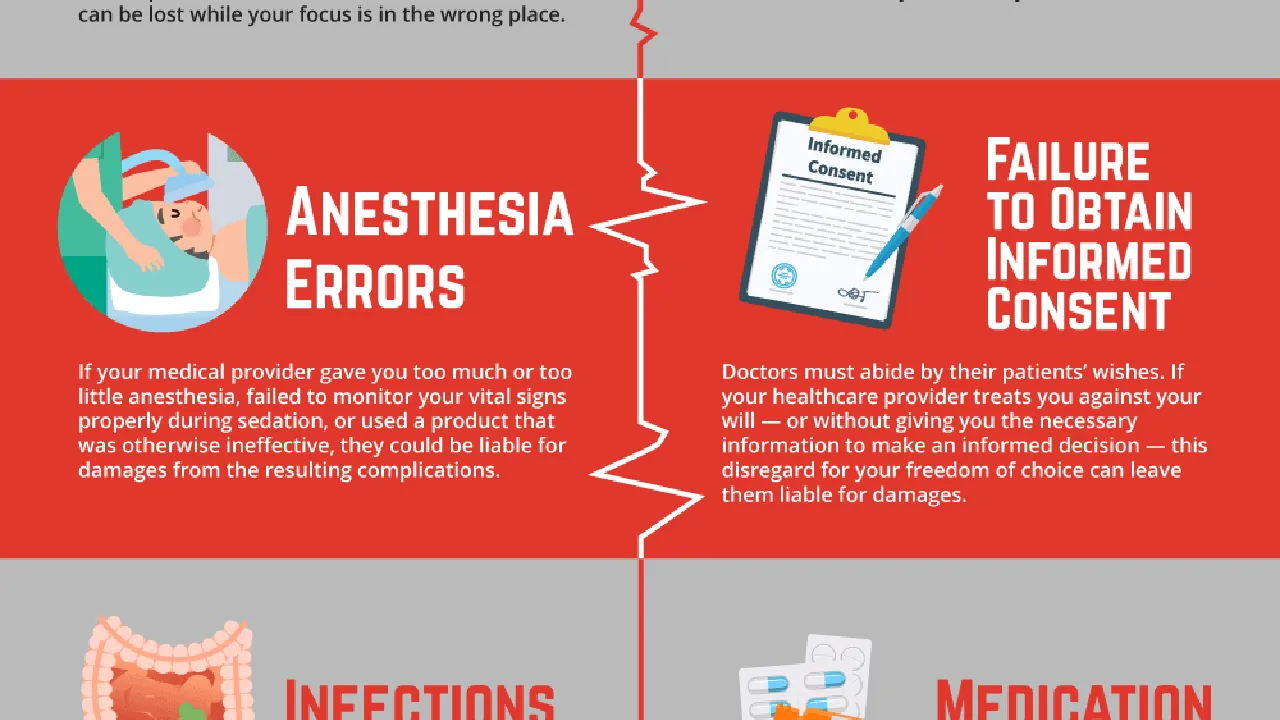
- Anesthesia Errors: Administering too much or too little anesthesia, or failing to properly monitor a patient during sedation, can lead to serious complications, including brain damage or even death. This is a critical area where proper training and vigilance are paramount.
- Improper Extractions: Pulling the wrong tooth, leaving root fragments behind, or causing excessive damage to surrounding teeth or bone during an extraction can all be grounds for a malpractice claim.
- Root Canal Errors: Perforating the tooth, failing to properly clean and fill the canals, or using contaminated instruments can lead to severe infections, tooth loss, and ongoing pain.
- Implant Failures: Improper placement of dental implants, using incorrect implant sizes, or failing to assess bone density adequately can lead to implant failure, infection, and the need for costly corrective procedures.
- Faulty Crowns, Bridges, or Fillings: While sometimes these just don't last, if they are poorly designed, improperly fitted, or made with substandard materials due to the dentist's negligence, and they cause further damage or injury, it could be malpractice.
- Infections: Failing to maintain sterile conditions, not properly cleaning a wound, or not prescribing appropriate antibiotics when necessary can lead to serious infections that spread and cause widespread health problems.
These are just some examples, but the key takeaway is that if a dentist's actions (or inactions) directly caused you harm that a competent dentist would have avoided, you might have a case.
The Legal Process Filing Your Dental Malpractice Claim
So, you suspect dental malpractice. What's next? The legal process can seem daunting, but understanding the steps can help you navigate it. It's generally similar to other personal injury claims, but with specific nuances related to medical and dental standards.
- Consult with an Attorney: This is your first and most crucial step. A personal injury attorney specializing in medical or dental malpractice will evaluate your case, determine its viability, and explain your legal options. They'll look at the facts, your injuries, and the potential for proving negligence.
- Gathering Evidence: Your attorney will help you collect all necessary documentation. This includes your complete dental records (x-rays, treatment plans, notes), medical records related to your injuries, bills, and any photographs of the damage.
- Expert Witness Review: In almost all dental malpractice cases, you'll need an expert witness – another qualified dentist – to review your records and provide an opinion that the treating dentist deviated from the standard of care and that this deviation caused your injuries. This is a critical component of proving your case.
- Filing the Lawsuit: Once your attorney has sufficient evidence and an expert opinion, they will file a formal lawsuit against the dentist and potentially the dental practice.
- Discovery Phase: This is where both sides exchange information. Your attorney will depose the dentist, and the defense will depose you. They'll also exchange documents and evidence.
- Negotiation and Mediation: Many malpractice cases are settled out of court. Your attorney will negotiate with the dentist's insurance company to reach a fair settlement. Mediation, where a neutral third party helps facilitate discussions, is also common.
- Trial: If a settlement cannot be reached, the case will proceed to trial. This is where a judge or jury will hear the evidence and decide the outcome.
Remember, there are strict deadlines, known as the statute of limitations, for filing these types of claims. These vary by state in the USA and by country in Southeast Asia, so acting quickly is essential.
Calculating Damages What Your Claim Could Be Worth
If you've been a victim of dental malpractice, you're likely wondering what kind of compensation you might be entitled to. Damages in a dental malpractice case are designed to make you whole again, as much as money can. They typically fall into a few categories:
- Medical Expenses: This includes all past and future costs related to your injury, such as corrective dental procedures, specialist consultations, medications, physical therapy, and any other medical treatment necessitated by the malpractice.
- Lost Wages: If your injury prevented you from working, or reduced your earning capacity, you can claim compensation for lost income, both past and future.
- Pain and Suffering: This is compensation for the physical pain, emotional distress, mental anguish, and loss of enjoyment of life caused by the malpractice. This can be a significant component of damages, especially in cases involving permanent disfigurement or chronic pain.
- Disfigurement: If the dental malpractice resulted in permanent scarring or disfigurement, you can seek specific compensation for this.
- Loss of Consortium: In some cases, if the injury significantly impacts your relationship with your spouse, they may also be able to claim damages for loss of companionship and support.
The exact value of your claim will depend on the severity of your injuries, the extent of your financial losses, and the impact on your quality of life. An experienced attorney will be crucial in accurately assessing and calculating these damages.
Preventing Dental Malpractice Choosing Your Dentist Wisely
While we're focusing on what to do if malpractice occurs, it's also worth discussing how to minimize your risk. Choosing a competent and trustworthy dentist is paramount. Here are some tips:
- Check Credentials: Verify their licenses, certifications, and any specialty training. In the USA, you can often check state dental board websites. In Southeast Asia, similar regulatory bodies exist.
- Read Reviews: Online reviews can offer insights into other patients' experiences, though always take them with a grain of salt. Look for patterns, not just isolated complaints.
- Ask for Referrals: Get recommendations from friends, family, or even your primary care physician.
- Initial Consultation: Don't be afraid to schedule a consultation before committing to major work. Ask questions about their experience with specific procedures, their approach to patient care, and their emergency protocols.
- Clear Communication: Ensure your dentist explains procedures thoroughly, discusses risks and alternatives, and answers all your questions. Informed consent is a legal and ethical requirement.
- Second Opinions: For complex or expensive procedures, always consider getting a second opinion from another qualified dentist.
Specific Dental Products and Malpractice Scenarios When Things Go Wrong
Sometimes, malpractice isn't just about the dentist's technique, but also about the materials or products they use. While dentists generally use reputable brands, issues can arise from improper use, faulty products, or even a dentist's choice of a less-than-ideal product for your specific situation. Here are a few examples and considerations:
Dental Implants Product Selection and Placement Errors
Dental implants are a fantastic solution for missing teeth, but they are complex. Malpractice can occur if the dentist:
- Uses an inferior implant system: While many brands are excellent, some dentists might opt for cheaper, less-researched implants that have a higher failure rate. Reputable brands like Nobel Biocare, Straumann, and Dentsply Sirona (Astra Tech) are widely recognized for their quality, extensive research, and long-term success rates. If a dentist uses a no-name brand that fails prematurely due to inherent flaws, and they didn't adequately inform you of the risks or alternatives, that could be an issue.
- Improperly places the implant: This is a common cause of nerve damage or sinus perforation. The dentist might not have used proper imaging (like a CBCT scan) to assess bone density and nerve pathways, or they might have simply made a technical error during placement.
- Fails to assess bone quality: If your bone isn't dense enough to support an implant, and the dentist proceeds without a bone graft or other preparatory work, the implant is likely to fail.
Comparison: Nobel Biocare and Straumann are often considered premium brands, known for their innovative designs and extensive clinical data. Dentsply Sirona also offers high-quality systems. Cheaper, lesser-known brands might save money upfront but could lead to long-term complications and potential malpractice claims if their failure is due to inherent product flaws combined with negligent selection by the dentist. Prices for implants vary wildly, but a single implant from a top brand can range from $1,500 to $3,000 for the implant itself, not including the crown or surgical fees. Cheaper implants might be a few hundred dollars less, but the long-term cost of failure can be much higher.
Dental Fillings and Bonding Material Choices and Application
Fillings and bonding are routine, but errors can still occur:
- Incorrect material choice: For example, using a composite filling in an area of very high bite force where amalgam might have been more appropriate, leading to premature failure and further tooth damage. Or, using a material you're allergic to without proper screening.
- Improper application: Not properly isolating the tooth, leading to contamination and premature failure of the filling, or not curing the composite material adequately.
Products: For composite fillings, brands like 3M Filtek, Dentsply Sirona Esthet X HD, and GC Fuji (for glass ionomer options) are widely used and respected. Amalgam fillings (silver fillings) are still used, though less frequently, and their composition is fairly standard. The cost of a filling varies greatly by size and material, from $100-$400. If a filling fails prematurely due to the dentist's negligent application or inappropriate material choice, leading to a larger cavity or root canal, that could be a malpractice issue.
Orthodontic Treatment Braces and Aligners Mismanagement
Orthodontics, while often seen as cosmetic, can lead to serious issues if mismanaged:
- Improper treatment planning: Moving teeth too quickly, or in the wrong direction, can cause root resorption, bone loss, or even tooth loss.
- Failure to monitor: Not regularly checking progress, leading to prolonged treatment or adverse outcomes.
- Using inappropriate appliances: While Invisalign and traditional braces (like those from 3M Unitek or Ormco) are excellent, if a dentist or orthodontist uses an appliance that's not suitable for your specific case, or fails to manage it correctly, it can cause harm.
Comparison: Invisalign (clear aligners) and traditional metal or ceramic braces are the two main categories. Invisalign is popular for aesthetics and convenience, but requires patient compliance. Traditional braces offer more precise control for complex cases. The cost for either can range from $3,000 to $8,000 or more. Malpractice here often stems from the practitioner's judgment and execution, rather than the product itself, but a poor choice of product for a specific case could contribute.
Root Canal Therapy Endodontic Instrument Breakage and Infection
Root canals are delicate procedures, and errors can have severe consequences:
- Instrument breakage: A file breaking off inside the root canal is a known risk, but if it happens due to excessive force or using a fatigued instrument, and the dentist fails to inform you or attempt removal, it could be malpractice.
- Incomplete cleaning or filling: Leaving infected tissue behind or not properly sealing the canal can lead to persistent infection and the need for re-treatment or extraction.
Products: Endodontic files (e.g., from Dentsply Sirona ProTaper, FKG Dentaire XP-endo) are critical. While instrument breakage is a known complication, negligence can arise from using old, fatigued instruments, or improper technique. The cost of a root canal can range from $700 to $2,000, depending on the tooth and complexity. If a root canal fails due to negligent technique or product misuse, leading to further complications, it's a strong malpractice consideration.
Statute of Limitations and Expert Testimony Key Factors in Your Claim
Two critical elements in any dental malpractice claim are the statute of limitations and the need for expert testimony.
Statute of Limitations Deadlines for Dental Malpractice Claims
The statute of limitations is the legal deadline for filing a lawsuit. If you miss this deadline, you generally lose your right to sue, regardless of how strong your case is. These deadlines vary significantly:
- In the USA: Most states have a statute of limitations for medical/dental malpractice ranging from 1 to 3 years from the date of injury or the date the injury was discovered (the 'discovery rule'). Some states have an absolute 'statute of repose' which sets an outer limit, regardless of when the injury was discovered. For example, California has a 1-year discovery rule but a 3-year statute of repose. New York is generally 2.5 years.
- In Southeast Asia: These deadlines also vary. For instance, in Singapore, the limitation period for personal injury claims is generally 3 years. In Malaysia, it's 6 years. Thailand also typically has a 1-year limitation period from the date of discovery, but an absolute limit of 10 years from the act of malpractice.
It's crucial to consult with an attorney as soon as you suspect malpractice to understand the specific deadlines applicable to your situation.
The Role of Expert Testimony Proving Negligence in Dental Cases
As mentioned earlier, expert testimony is almost always required in dental malpractice cases. Why? Because the average person (and even a judge or jury) doesn't have the specialized knowledge to determine if a dentist acted negligently. An expert witness, who is a licensed and practicing dentist (often with a specialty relevant to your case), will:
- Review your dental records, x-rays, and other evidence.
- Provide an opinion on the accepted standard of care for the specific procedure and circumstances.
- State whether, in their professional opinion, your treating dentist deviated from that standard of care.
- Explain how that deviation directly caused your injuries.
Without this expert opinion, it's incredibly difficult to prove negligence and causation, which are fundamental elements of a malpractice claim. Your attorney will work to find a credible and experienced expert witness to support your case.
Navigating Your Dental Malpractice Journey Seeking Justice
Dealing with dental malpractice can be a frustrating and painful experience, both physically and emotionally. It's not just about the immediate injury; it can lead to long-term health issues, significant financial burdens for corrective treatments, and a loss of trust in healthcare professionals. But remember, you don't have to go through it alone. Understanding your rights, knowing what constitutes malpractice, and taking prompt legal action are your best steps forward. If you believe you've been a victim of dental negligence, reaching out to a qualified personal injury attorney specializing in dental malpractice is the most important thing you can do. They can help you gather the necessary evidence, secure expert testimony, and fight for the compensation you deserve to help you recover and move forward with your life. Don't let a negligent dental procedure define your future; explore your legal options and seek the justice you're entitled to.
:max_bytes(150000):strip_icc()/277019-baked-pork-chops-with-cream-of-mushroom-soup-DDMFS-beauty-4x3-BG-7505-5762b731cf30447d9cbbbbbf387beafa.jpg)