Warning Label Defect Compensation
Exploring compensation avenues for injuries due to inadequate warning labels on products.
Exploring compensation avenues for injuries due to inadequate warning labels on products.
Warning Label Defect Compensation Your Guide to Justice
Hey there! Ever bought something, used it, and then realized it could have seriously hurt you because the instructions or warnings were just… missing or unclear? It’s a frustrating and often dangerous situation. We’re talking about products that, without proper guidance, can cause real harm. This isn't just about a minor inconvenience; it's about serious personal injury that could have been avoided if the manufacturer had just done their job right. In the world of product liability, this falls under 'warning label defects' – and if you've been injured because of one, you might be entitled to compensation. Let's dive into what that means for you, especially if you're in the USA or Southeast Asia.
Understanding Warning Label Defects What You Need to Know
So, what exactly is a warning label defect? It's not always about a physical flaw in the product itself. Sometimes, the product is perfectly manufactured and designed, but it's dangerous because the manufacturer failed to provide adequate warnings or instructions for its safe use. Think about it: a powerful cleaning agent without a 'do not mix with bleach' warning, a children's toy with small parts but no choking hazard label, or a piece of machinery without clear instructions on how to operate it safely. These are all examples where the lack of proper information can turn a seemingly harmless product into a hazard.
Manufacturers have a legal responsibility to warn consumers about potential dangers associated with their products that aren't obvious to the average user. This duty extends to foreseeable misuses of the product too. If they fail in this duty, and you get hurt as a direct result, you might have a strong case for a product liability claim. This isn't just about a sticker; it's about ensuring consumer safety through clear, concise, and comprehensive information.
Common Injuries from Inadequate Warnings Protecting Yourself
The types of injuries that can result from inadequate warnings are incredibly varied, ranging from minor burns to severe, life-altering conditions, or even death. Here are some common examples:
- Chemical Burns and Poisoning: Often from cleaning products, pesticides, or industrial chemicals without proper handling instructions or warnings about mixing substances.
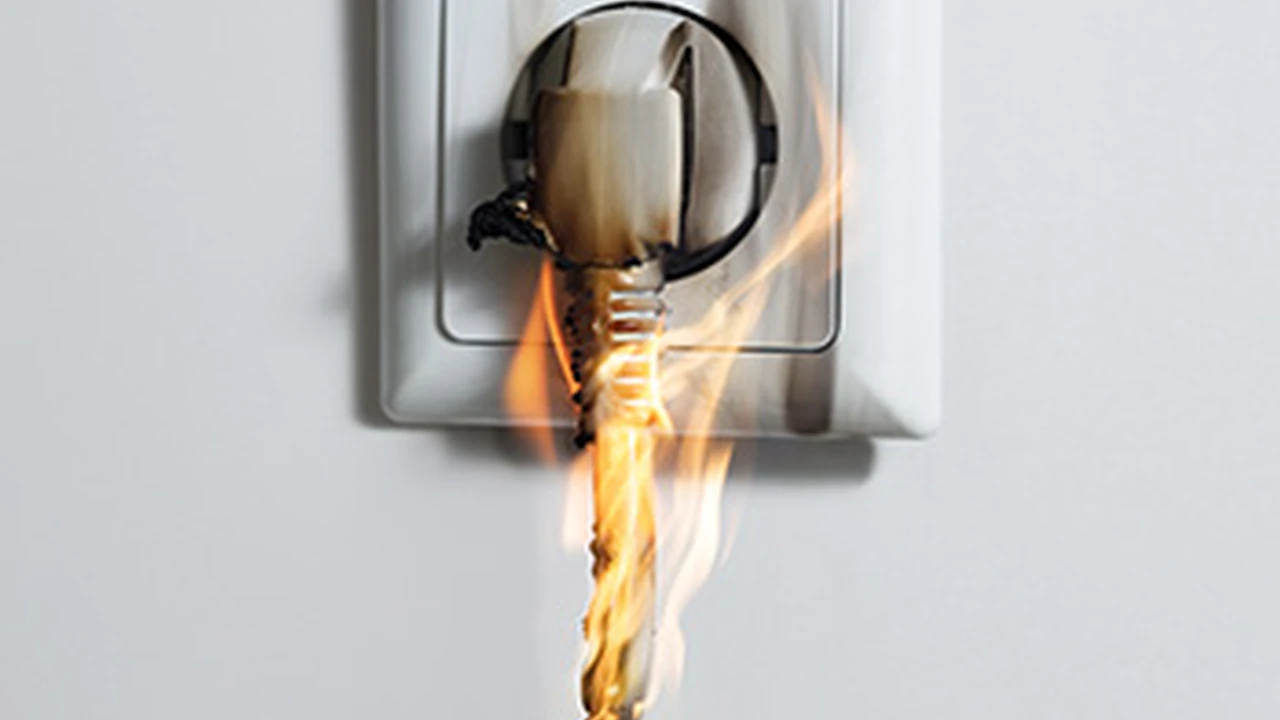
- Electrocution: From electronic devices lacking warnings about water exposure or improper grounding.
- Cuts and Lacerations: From tools or machinery without clear instructions on safe operation or handling sharp parts.
- Choking Hazards: Especially with children's toys that don't clearly label small parts for certain age groups.
- Allergic Reactions: Food products or cosmetics that fail to list common allergens.
- Fires and Explosions: From flammable materials or devices without warnings about heat sources or proper ventilation.
- Internal Organ Damage: From ingesting toxic substances or prolonged exposure to harmful chemicals without proper protective gear warnings.
It's crucial to seek medical attention immediately if you've been injured. Your health is paramount, and detailed medical records will be vital evidence for any potential claim.
Product Liability Law USA vs Southeast Asia Navigating Legal Waters
Product liability laws, especially concerning warning defects, can vary significantly between the USA and Southeast Asian countries. Understanding these differences is key to pursuing a successful claim.
United States Product Liability Law Consumer Protection
In the USA, product liability law is generally quite robust and consumer-friendly. Most states operate under a 'strict liability' standard for product defects, including warning defects. This means you generally don't have to prove that the manufacturer was negligent; you just need to prove that the product had an inadequate warning, that this inadequacy made the product unreasonably dangerous, and that it directly caused your injury. This simplifies the legal process for injured consumers.
Key aspects in the USA include:
- Strict Liability: As mentioned, often no need to prove negligence.
- Duty to Warn: Manufacturers must warn about non-obvious dangers and foreseeable misuses.
- Foreseeability: Warnings must cover dangers that are known or should have been known by the manufacturer.
- Adequacy of Warning: Warnings must be clear, conspicuous, and understandable to the average user.
- Damages: Compensation can include medical expenses, lost wages, pain and suffering, and sometimes punitive damages.
Southeast Asia Product Liability Law Regional Differences
Product liability laws in Southeast Asia are more diverse and can be less uniform than in the USA. Some countries, like Singapore and Malaysia, have adopted laws that are somewhat similar to Western models, incorporating elements of strict liability or consumer protection acts. Others might rely more on general contract law or tort law principles, where proving negligence on the part of the manufacturer might be a more significant hurdle.
For example:
- Singapore: The Consumer Protection (Fair Trading) Act provides some recourse for defective products, and common law principles of negligence can also apply.
- Malaysia: The Consumer Protection Act 1999 includes provisions for product liability, allowing consumers to claim for damage caused by defective products.
- Thailand: The Product Liability Act B.E. 2551 (2008) introduced strict liability for manufacturers and importers of unsafe products.
- Philippines: Consumer Act of the Philippines (Republic Act No. 7394) provides for consumer product safety and liability, though often requiring proof of negligence.
- Indonesia: The Consumer Protection Law (Law No. 8 of 1999) offers some protection, but enforcement and specific product liability claims can be complex.
The key takeaway here is that while consumer protection is growing in Southeast Asia, the legal landscape can be more fragmented. It's absolutely essential to consult with a local personal injury lawyer who specializes in product liability in the specific country where the injury occurred.
Hiring a Product Liability Lawyer When to Make the Call
If you've been injured due to an inadequate warning label, contacting a product liability lawyer should be one of your first steps after seeking medical attention. Here's why:
- Complex Laws: Product liability cases are notoriously complex, involving detailed legal arguments, expert testimony, and often large corporations.
- Evidence Collection: Lawyers know what evidence is needed – from the product itself to purchase records, medical reports, and expert opinions.
- Negotiation Skills: They can effectively negotiate with manufacturers and their insurance companies, who will likely try to minimize your claim.
- Litigation Experience: If a fair settlement can't be reached, your lawyer will be prepared to take your case to court.
- Statute of Limitations: There are strict deadlines for filing these types of lawsuits, and a lawyer will ensure you don't miss them.
Don't try to navigate this alone. A skilled attorney can significantly improve your chances of receiving fair compensation.
Proving a Warning Label Defect Building Your Case
To successfully claim compensation for a warning label defect, you generally need to prove a few key things:
- The Product Had an Inadequate Warning: This means the warning was either missing entirely, unclear, not prominent enough, or didn't cover a foreseeable danger.
- The Inadequate Warning Made the Product Unreasonably Dangerous: Without the proper warning, the product posed a risk that an ordinary consumer wouldn't expect.
- You Were Injured: You suffered actual harm or damages.
- The Inadequate Warning Directly Caused Your Injury: There's a clear link between the lack of warning and the harm you suffered.
This often involves expert testimony from engineers, product safety specialists, and medical professionals to establish the defect and causation. Your lawyer will guide you through gathering all necessary documentation and evidence.
Specific Product Examples and Their Warning Challenges Real-World Scenarios
Let's look at some specific product categories where warning label defects frequently arise, along with examples of products and the types of warnings that are often inadequate.
Household Cleaning Products The Hidden Dangers
Many common household cleaners contain powerful chemicals that can cause severe burns, respiratory issues, or poisoning if misused. The warnings often fall short in several ways:
- Missing 'Do Not Mix' Warnings: For example, a toilet bowl cleaner containing bleach and a separate drain cleaner containing ammonia. If a consumer mixes them, it can create toxic chlorine gas. An inadequate warning would fail to explicitly state 'DO NOT MIX WITH OTHER CLEANERS, ESPECIALLY AMMONIA-BASED PRODUCTS.'
- Insufficient Ventilation Warnings: Products like oven cleaners or strong disinfectants require good ventilation. A warning that simply says 'Use in a well-ventilated area' might be inadequate if it doesn't specify why or the potential consequences of poor ventilation (e.g., 'May cause severe respiratory irritation if inhaled in confined spaces').
- Child Safety Warnings: Many products have child-resistant caps, but the warning might not clearly state 'KEEP OUT OF REACH OF CHILDREN' in a prominent enough way, or fail to warn about the severe consequences of ingestion.
Example Product: A generic brand of drain cleaner. Let's say 'PowerFlow Drain Unclogger'.
Scenario: A consumer uses PowerFlow, it doesn't work, and then they try another brand of cleaner containing a different chemical, leading to a dangerous chemical reaction and severe burns. The PowerFlow label only said 'Avoid contact with skin' but failed to warn against mixing with other chemicals.
Comparison: A well-labeled drain cleaner like 'Drano Max Gel' typically has very explicit warnings: 'DANGER: CORROSIVE. CAUSES SEVERE BURNS. HARMFUL IF SWALLOWED. DO NOT MIX WITH BLEACH OR OTHER HOUSEHOLD CHEMICALS.' This level of detail is what's expected.
Typical Price Range: Household cleaners usually range from $5 to $20.
Power Tools and Machinery Operating Safely
Power tools, from drills to saws, are inherently dangerous if not used correctly. Inadequate warnings can lead to severe lacerations, amputations, or eye injuries.
- Lack of Eye Protection Warnings: A power drill might not prominently warn 'ALWAYS WEAR EYE PROTECTION' or explain the risk of flying debris.
- Improper Assembly Instructions: Some tools require assembly, and if the instructions are unclear or omit critical steps, it can lead to unstable or dangerous operation.
- Kickback Warnings: Saws, especially circular saws, can 'kick back' if not used properly. A warning might be inadequate if it doesn't clearly explain the risk, how to prevent it, and the potential for severe injury.
Example Product: A budget-friendly circular saw, let's call it 'SpeedCut 7-inch Saw'.
Scenario: A DIY enthusiast buys the SpeedCut saw. The manual has small, hard-to-read text and only a generic 'Use with caution' warning. During use, the saw kicks back, causing a deep laceration to the user's arm. A more adequate warning would have large, bold text stating 'WARNING: RISK OF KICKBACK. ALWAYS MAINTAIN FIRM GRIP AND PROPER STANCE. WEAR SAFETY GLOVES AND EYE PROTECTION.' and detailed diagrams on safe operation.
Comparison: High-end brands like 'DeWalt' or 'Makita' typically have comprehensive safety manuals with clear, multi-language warnings, diagrams, and specific instructions for various cutting scenarios, often including warnings about kickback and blade guards.
Typical Price Range: Power tools can range from $50 for basic models to $500+ for professional-grade equipment.
Pharmaceuticals and Medical Devices Clear Instructions are Life-Saving
This category is particularly sensitive, as inadequate warnings can have life-threatening consequences. This includes prescription drugs, over-the-counter medications, and medical devices.
- Drug Interaction Warnings: A medication might not clearly warn about dangerous interactions with other common drugs or foods.
- Side Effect Disclosure: While all drugs have side effects, an inadequate warning might downplay severe ones or fail to list them prominently.
- Dosage Instructions: Unclear dosage instructions, especially for children or individuals with specific health conditions, can lead to overdose or under-dosing.
- Medical Device Usage: A home-use medical device (e.g., a blood pressure monitor, nebulizer) might have instructions that are too technical or lack clear troubleshooting steps, leading to incorrect use and potential harm.
Example Product: An over-the-counter pain reliever, 'RapidRelief Max Strength'.
Scenario: A consumer takes RapidRelief for a headache. They also take a prescription blood thinner, but the RapidRelief label only has a tiny, easily overlooked warning about 'consulting a doctor if on other medications.' The combination leads to internal bleeding. An adequate warning would have a prominent, bolded section: 'WARNING: DO NOT USE IF YOU ARE TAKING BLOOD THINNERS WITHOUT CONSULTING YOUR PHYSICIAN. MAY INCREASE RISK OF BLEEDING.' and potentially a symbol.
Comparison: Reputable brands like 'Tylenol' or 'Advil' have extensive package inserts and clear warnings on the bottle about interactions, maximum dosage, and when to consult a doctor, often using larger fonts and distinct sections for warnings.
Typical Price Range: OTC medications usually range from $5 to $30.
Children's Products Safety First
Products designed for children have an even higher duty to warn, given the vulnerability of the users.
- Choking Hazard Labels: Toys with small parts must clearly state 'WARNING: CHOKING HAZARD - Small parts. Not for children under 3 years.' An inadequate warning might omit this or place it in an obscure location.
- Suffocation Warnings: Cribs, playpens, or plastic packaging for children's items must warn about suffocation risks.
- Flammability Warnings: Children's clothing or bedding might require warnings if they are not flame-resistant.
Example Product: A colorful building block set, 'Tiny Builder Blocks'.
Scenario: A grandparent buys Tiny Builder Blocks for their 1-year-old grandchild. The box has a small, almost invisible 'Ages 3+' label on the back. The child chokes on a small block. An adequate warning would have a large, clear 'WARNING: CHOKING HAZARD - Small parts. Not for children under 3 years' prominently displayed on the front of the packaging, possibly with a graphic symbol.
Comparison: Brands like 'LEGO Duplo' for younger children have larger, safer blocks, and their packaging clearly indicates age ranges. For sets with smaller pieces, 'LEGO' packaging prominently displays choking hazard warnings and recommended age ranges.
Typical Price Range: Children's toys can range from $10 to $100+, depending on complexity and brand.
Evidence for Product Liability Cases Your Checklist
Gathering the right evidence is paramount. Here's a checklist of what you'll need:
- The Product Itself: Do NOT discard the product, its packaging, or any instructions/warnings. This is your most crucial piece of evidence.
- Purchase Records: Receipts, credit card statements, or online order confirmations proving you bought the product.
- Medical Records: All documentation related to your injuries, treatments, diagnoses, and prognosis.
- Photographs/Videos: Of your injuries, the product, the scene of the accident, and any inadequate warnings.
- Witness Statements: If anyone saw the incident or can attest to the product's use or warnings.
- Correspondence: Any communication with the manufacturer or retailer.
- Lost Wages Documentation: Pay stubs, employment records, or tax returns if you missed work.
Your lawyer will help you organize and present this evidence effectively.
Strict Liability in Product Law What It Means for You
As mentioned, many jurisdictions, especially in the USA, apply 'strict liability' to product defect cases, including warning defects. This is a huge advantage for consumers. It means you don't have to prove that the manufacturer was careless or negligent in designing the warning. You only need to prove that the warning was inadequate, that it made the product unreasonably dangerous, and that this directly caused your injury. This simplifies the legal burden on the injured party, focusing on the product's condition rather than the manufacturer's conduct.
Statute of Limitations Product Liability Don't Miss the Deadline
Every legal claim has a deadline, known as the 'statute of limitations.' This is the period within which you must file your lawsuit. If you miss this deadline, you generally lose your right to sue, regardless of how strong your case is. These deadlines vary significantly by state in the USA and by country in Southeast Asia, typically ranging from 1 to 6 years from the date of injury or discovery of the injury.
For example:
- California (USA): Generally 2 years for personal injury.
- New York (USA): Generally 3 years for personal injury.
- Singapore: Generally 6 years for tort claims.
- Malaysia: Generally 6 years for tort claims.
- Thailand: Generally 3 years from the date of knowing the damage and the liable person, but not exceeding 10 years from the date of sale.
This is another critical reason to contact a lawyer as soon as possible. They can determine the exact deadline for your specific situation and ensure all necessary paperwork is filed on time.
Recalled Products Your Legal Options After an Injury
If you've been injured by a product that was later recalled due to an inadequate warning, your case might be even stronger. A recall often serves as an admission by the manufacturer that the product had a defect (including a warning defect) that posed a safety risk. However, a recall doesn't automatically mean you'll get compensation. You still need to prove that the inadequate warning caused your specific injury and damages.
If a product you used has been recalled, keep all recall notices and documentation. This will be powerful evidence in your claim. Even if the product wasn't recalled, you might still have a valid claim if the warning was inadequate.
Consumer Rights Product Liability Guide Empowering Yourself
As a consumer, you have fundamental rights, including the right to safe products and adequate information about their safe use. When these rights are violated, and you suffer an injury, product liability law provides a pathway to seek justice and compensation. Don't let manufacturers get away with cutting corners on safety warnings. Your well-being matters, and holding negligent companies accountable not only helps you but also contributes to greater product safety for everyone.
If you believe you've been injured due to an inadequate warning label, reach out to a qualified personal injury attorney specializing in product liability. They can assess your case, explain your options, and fight for the compensation you deserve. Remember, you don't have to face powerful corporations alone. Get the legal help you need to protect your rights and secure your future.
:max_bytes(150000):strip_icc()/277019-baked-pork-chops-with-cream-of-mushroom-soup-DDMFS-beauty-4x3-BG-7505-5762b731cf30447d9cbbbbbf387beafa.jpg)